The Breakfast Threat
The first one opened in a church basement in Oakland in January 1969. Eggs, grits, bacon, toast, milk, served to whoever came in before the bell. By the end of that year the Black Panther Party was feeding around twenty thousand children a free breakfast every school day across nineteen cities.[1] Congress had authorized a federal school breakfast program as a pilot in 1966 and wouldn't make it permanent until 1975.[2]
The Illinois chapter was Fred Hampton's, and he was twenty-one. He'd come up through the NAACP running the youth council of its West Suburban branch, and he'd only joined the Panthers in November of 1968.[3] He had thirteen months left.
The Chicago chapter ran its breakfast program on the West Side every morning school was open, cooked by volunteers who got up at four, and it opened a free medical clinic.
Hampton got some of Chicago's most notorious street gangs to sign a truce with each other.[4]
He built an alliance between the Panthers, the Young Lords, and the Young Patriots. The Young Lords were Puerto Rican, out of Lincoln Park, a street gang that had turned itself into a political organization running its own breakfasts and clinics and fighting the developers pushing their families out of the neighborhood.[5] The Young Patriots were poor white Appalachian migrants who kept a Confederate flag on their banner. Three groups with every reason to fight each other worked out that they were being squeezed by the same landlords, the same police, and the same city hall. Hampton called it a rainbow coalition.
J. Edgar Hoover looked at the breakfast program and saw a threat. In May of 1969 the Bureau's San Francisco office suggested there might be better uses for federal time than harassing people who fed children. Hoover wrote back that San Francisco had obviously missed the point and was not in line with Bureau objectives, and he explained what the Party was really doing:
"The BPP is not engaged in the program for humanitarian reasons. This program was formed by the BPP... to create an image of civility, assume community control of Negroes, and fill adolescent children with their insidious poison."[6]
Whether a breakfast program was legitimate Bureau business had been decided a year before that. In March of 1968 headquarters sent every special agent in charge a letter expanding a program called COINTELPRO, and the letter set out what the program was for. The Senate published it in 1976. First on the list: prevent the coalition of militant black nationalist groups. Next, prevent the rise of a messiah who could unify and electrify the movement, a description the Bureau attached by name to Martin Luther King, Stokely Carmichael, and Elijah Muhammad. Further down, keep these groups from recruiting the young.[7] Hampton had spent his thirteen months doing all three.
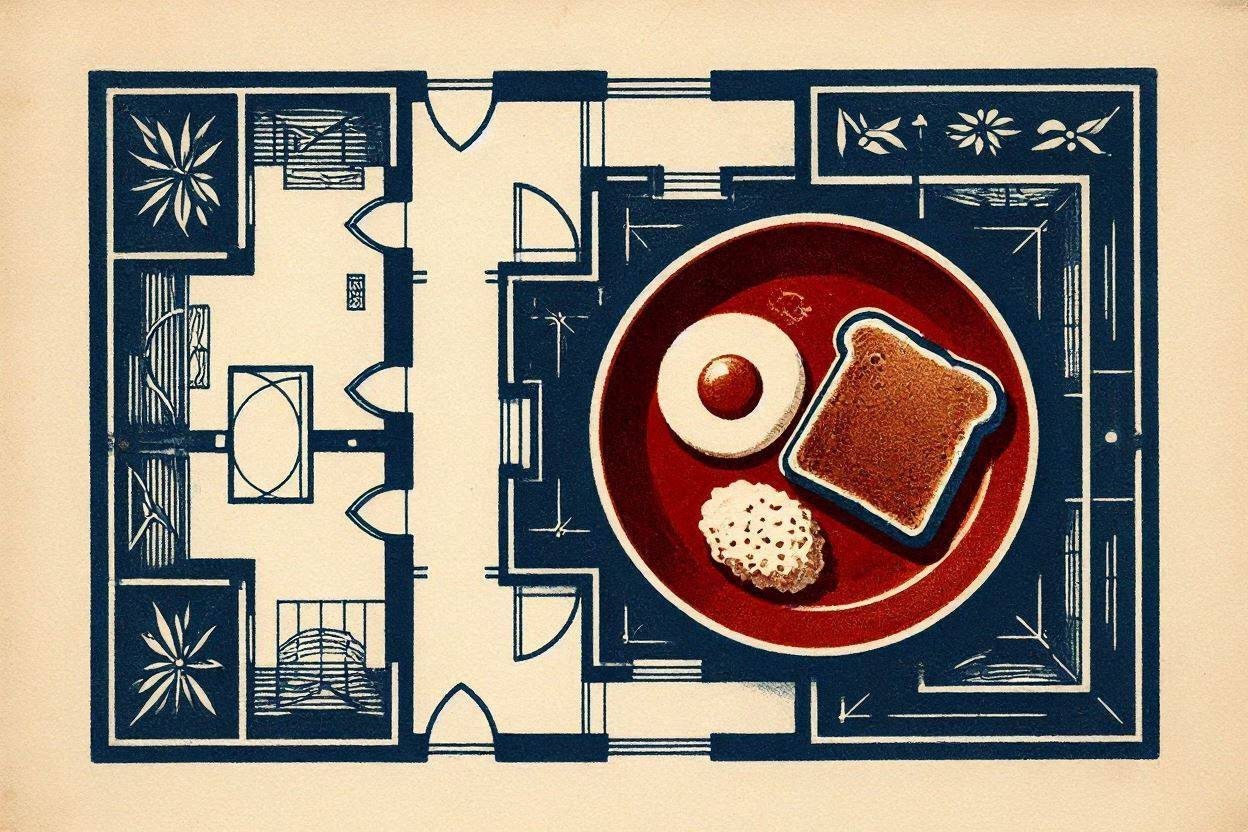
By the fall, the chief of security for the Illinois chapter was reporting to the FBI. William O'Neal had been recruited by Special Agent Roy Mitchell, and on the nineteenth of November the two of them drew up a floor plan of Hampton's apartment. It gave the layout of the rooms, the placement of the doors and the furniture, the names of everyone living or visiting there, and the location of the bedroom Hampton shared with his fiancée, Deborah Johnson.[8] Mitchell carried it to the State's Attorney's office.
Fourteen officers arrived at half past four in the morning on December 4. Nine people were asleep inside. The police fired more than eighty rounds into the apartment. One shot came back from Mark Clark, a twenty-two-year-old from Peoria, whose shotgun went off as he fell with a bullet in his heart.[9] They killed Hampton in the bedroom marked on the floor plan. Deborah Johnson, eight months pregnant, was in the bed beside him. Four other people were shot and lived.
A week later the Chicago office wrote to headquarters asking for a bonus for O'Neal, on the grounds that the raid had been built on information he supplied that was not available from any other source. Three hundred dollars was approved.
State's Attorney Edward Hanrahan told the city his men had walked into an ambush. He gave the Chicago Tribune exclusive photographs of the apartment showing where Panther bullets had struck the walls, and afterward praised the paper for its "accurate, fair and balanced account." The Sun-Times went and looked at the walls. The holes in the photographs were nail heads in a doorjamb, and the story ran on the front page under the headline "Those bullet holes aren't."[10]
A federal grand jury sat for five months and went home in May of 1970 without charging anyone, while reporting that the raid was badly conceived and the Chicago investigation so poor it looked deliberate. Hanrahan and thirteen others were tried for obstructing justice and acquitted in 1972. The survivors and the mothers of the two dead men sued, lost, and appealed, and in 1979 the Seventh Circuit ordered a new trial, finding that the federal defendants had stalled and obstructed to hide their part in planning the raid. The city, the county, and the federal government settled in 1982 for $1.85 million.[11] None of them owed anyone an explanation. Thirteen years, and no one was ever convicted.
Congress made the school breakfast program permanent in 1975. Millions of children eat one on an ordinary school morning now, and nobody writes a memo about it.
A card table of grits and toast in a church basement was proof that people could be fed, and that the state didn't have to be the thing feeding them. Hoover put the Bureau's informants and its money against that proposition. The young man who ran the kitchens, brokered the truce, and built the coalition was dead at twenty-one, thirteen months after he signed up.